

5.0
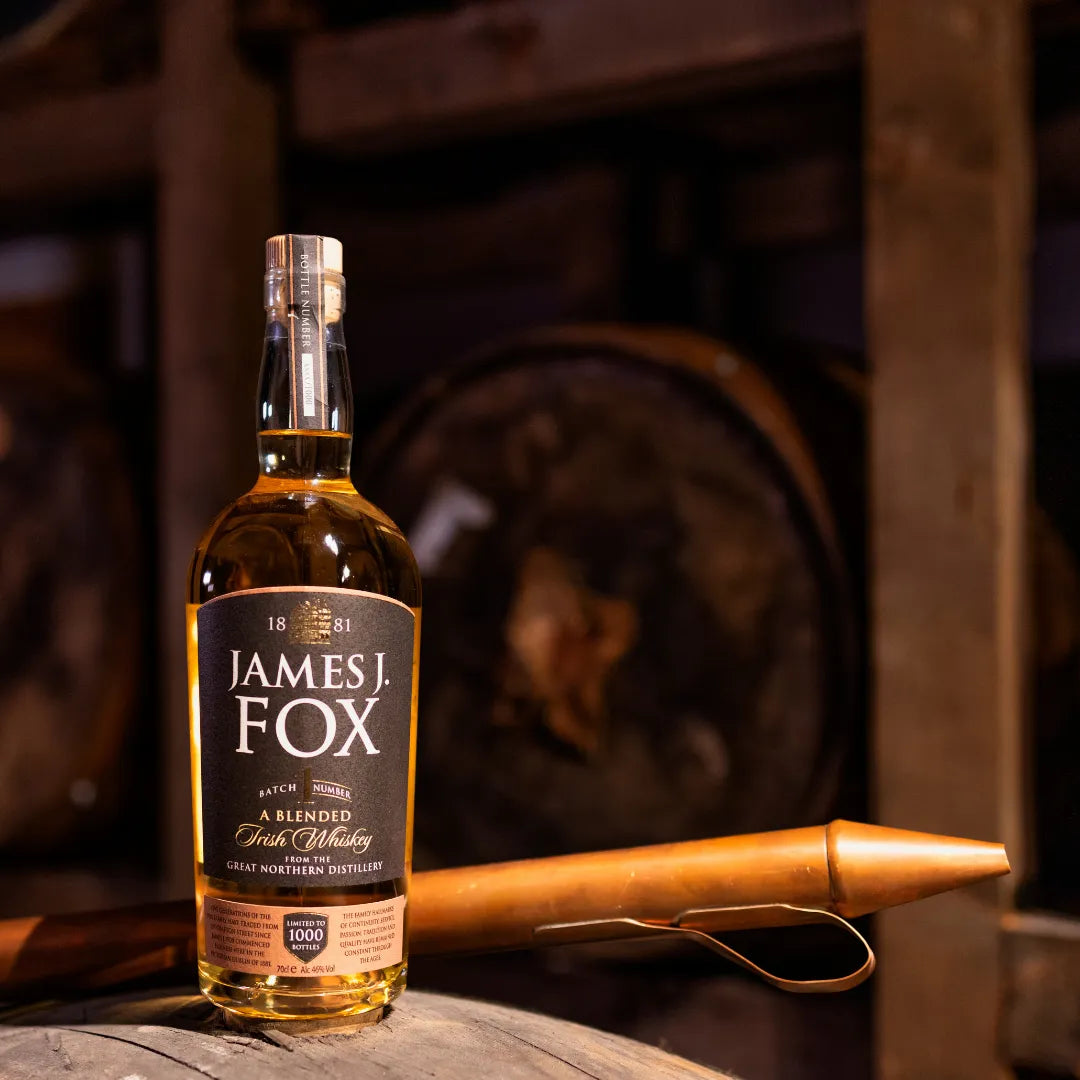
Bottle of James J. Fox blended Irish whiskey against a wooden barrel backdrop.

Buying Guide

How to Choose Irish Whiskey

Start by choosing between single malt, single pot still, and blends, then narrow by age, cask style, or ABV.

Explore Irish Whiskey
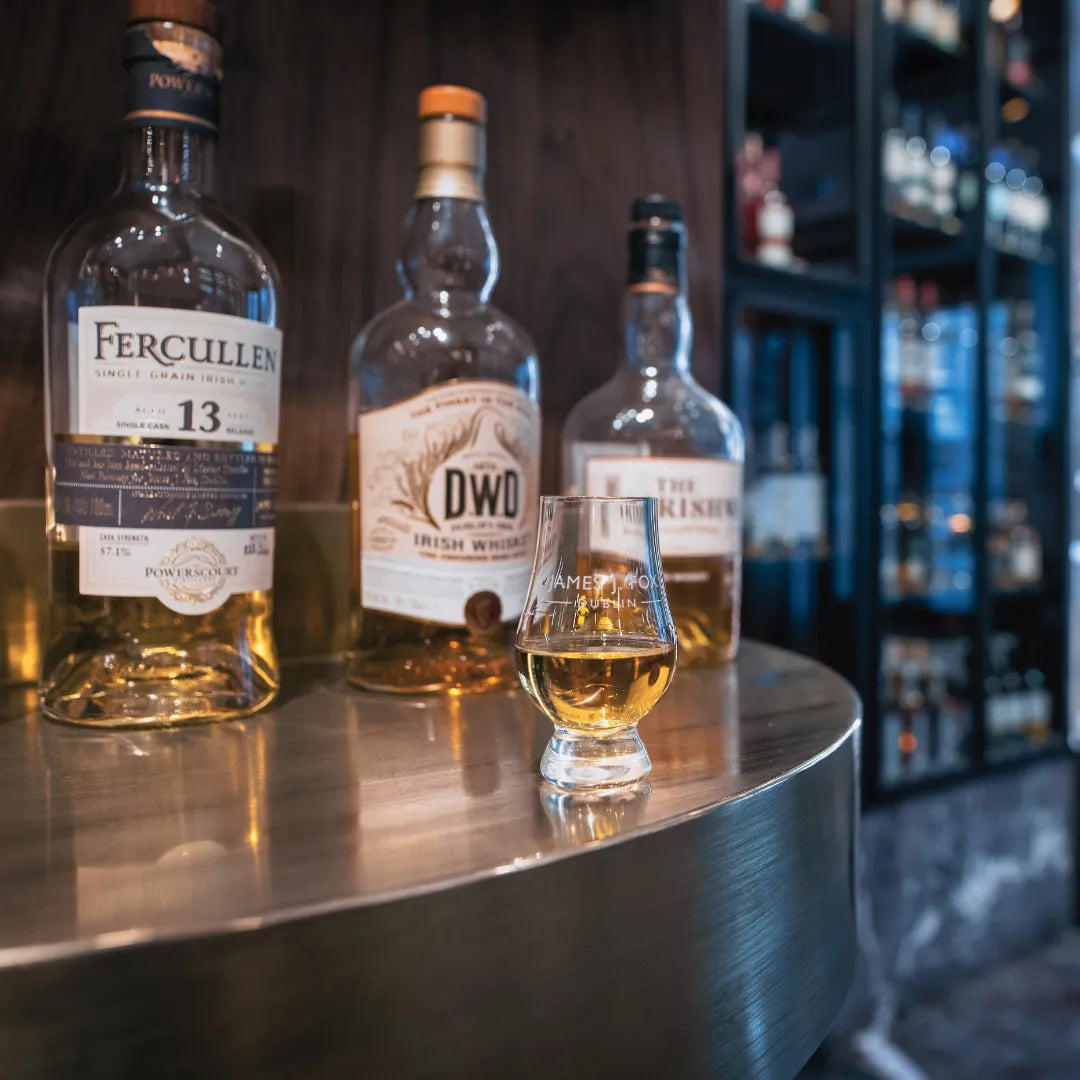
Three Irish whiskey bottles and a tasting glass on the shop counter in our Grafton Street store.

How to choose an Irish whiskey

If you already have a whiskey you enjoy, use its style, tasting notes and cask details as a starting point. These give you something to compare when choosing another bottle.

What do the different styles mean?

  • Single malt Irish whiskey is made from malted barley and distilled in pot stills.
  • Single pot still Irish whiskey uses both malted and unmalted barley, distilled in pot stills.
  • Single grain Irish whiskey is made with malted barley and other cereals, such as maize or wheat, using column stills.
  • Blended Irish whiskey combines two or more of these whiskey types.

For each of the single styles, “single” means the whiskey comes from one distillery. The style explains how it is made; the individual bottle’s tasting notes help you judge whether the flavour appeals to you.

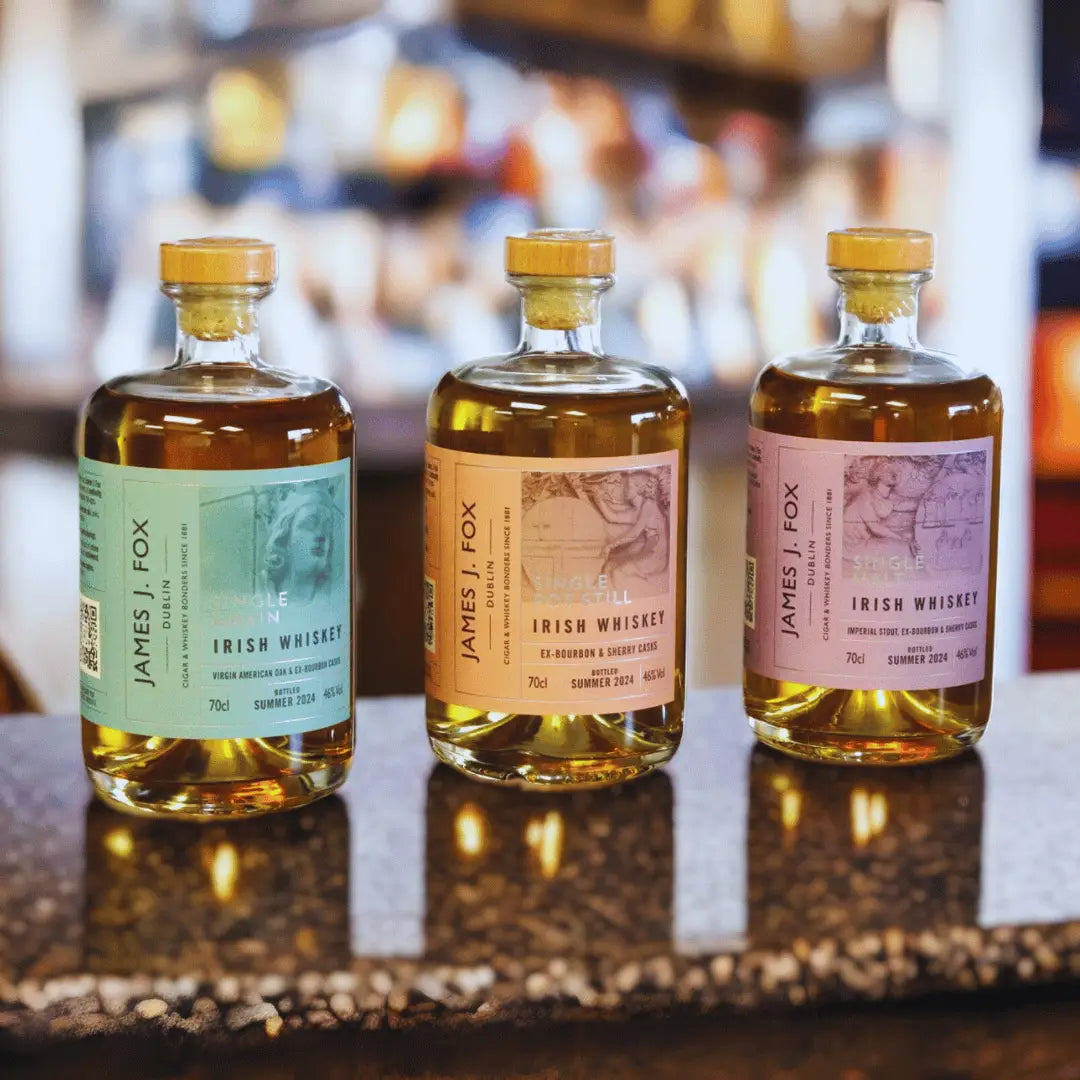
Our James J. Fox Single Malt, Single Pot Still and Single Irish Whiskey bottle on a wooden display in our store.

Compare the casks and tasting notes

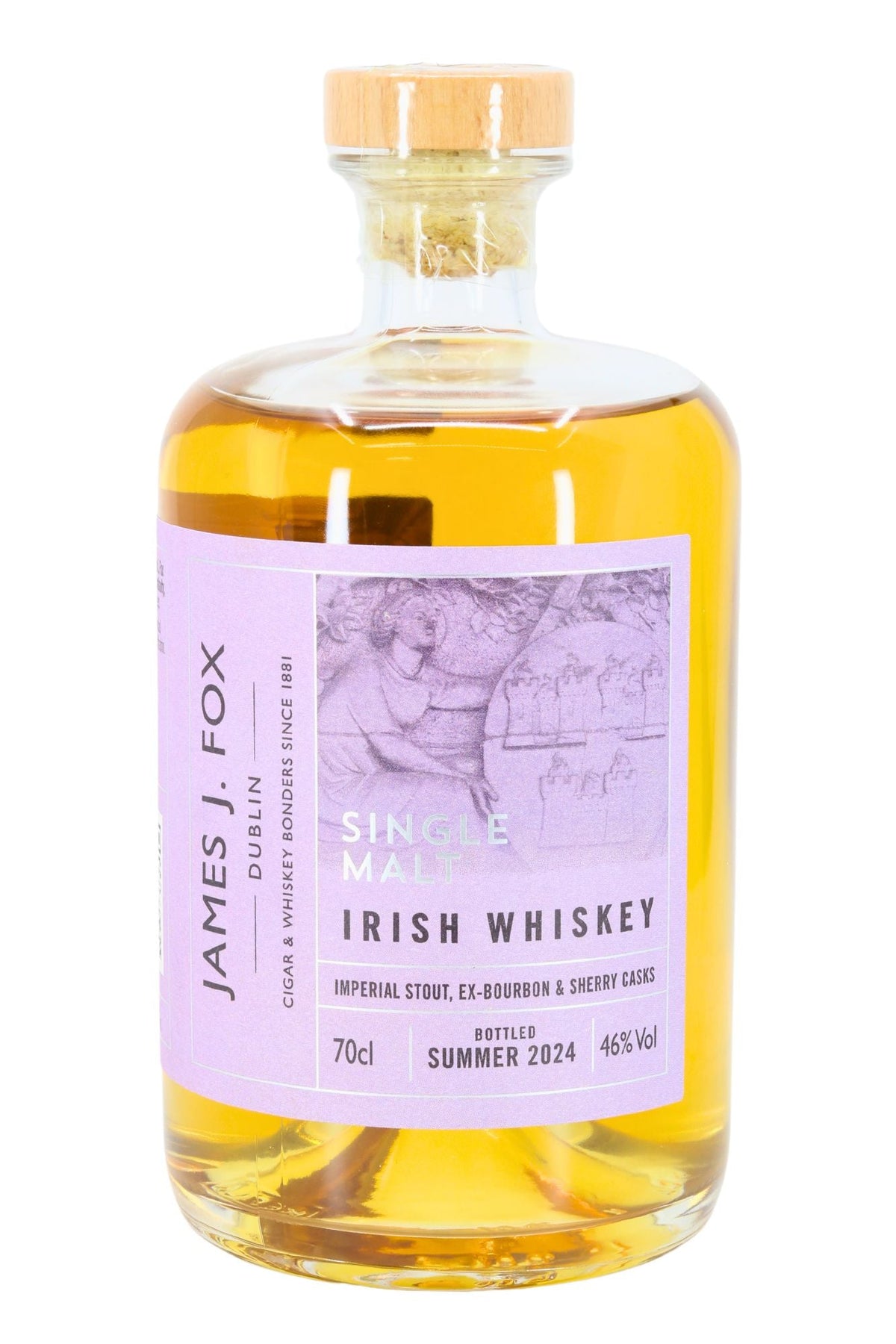
Our James J. Fox Single Malt and Single Pot Still are both bottled at 46% ABV, but offer different flavours. The Single Malt is matured in ex-bourbon barrels and finished in imperial stout and sherry casks, with notes of coffee and dark chocolate. The Single Pot Still uses ex-bourbon and sherry casks, with notes of spice and candied peel.

When comparing bottles, read the cask description and tasting notes alongside the alcohol strength. ABV alone will not tell you how a whiskey tastes.

Choosing Irish whiskey as a gift

Knowing one bottle the recipient enjoys can help narrow your choice. If you are unsure of their preferences, a miniature selection or tasting set gives them several whiskeys to try. Check the set’s contents and bottle sizes before choosing.

Browse miniatures & gift sets

Irish Whiskey FAQs

What is the difference between single cask and cask strength whiskey?

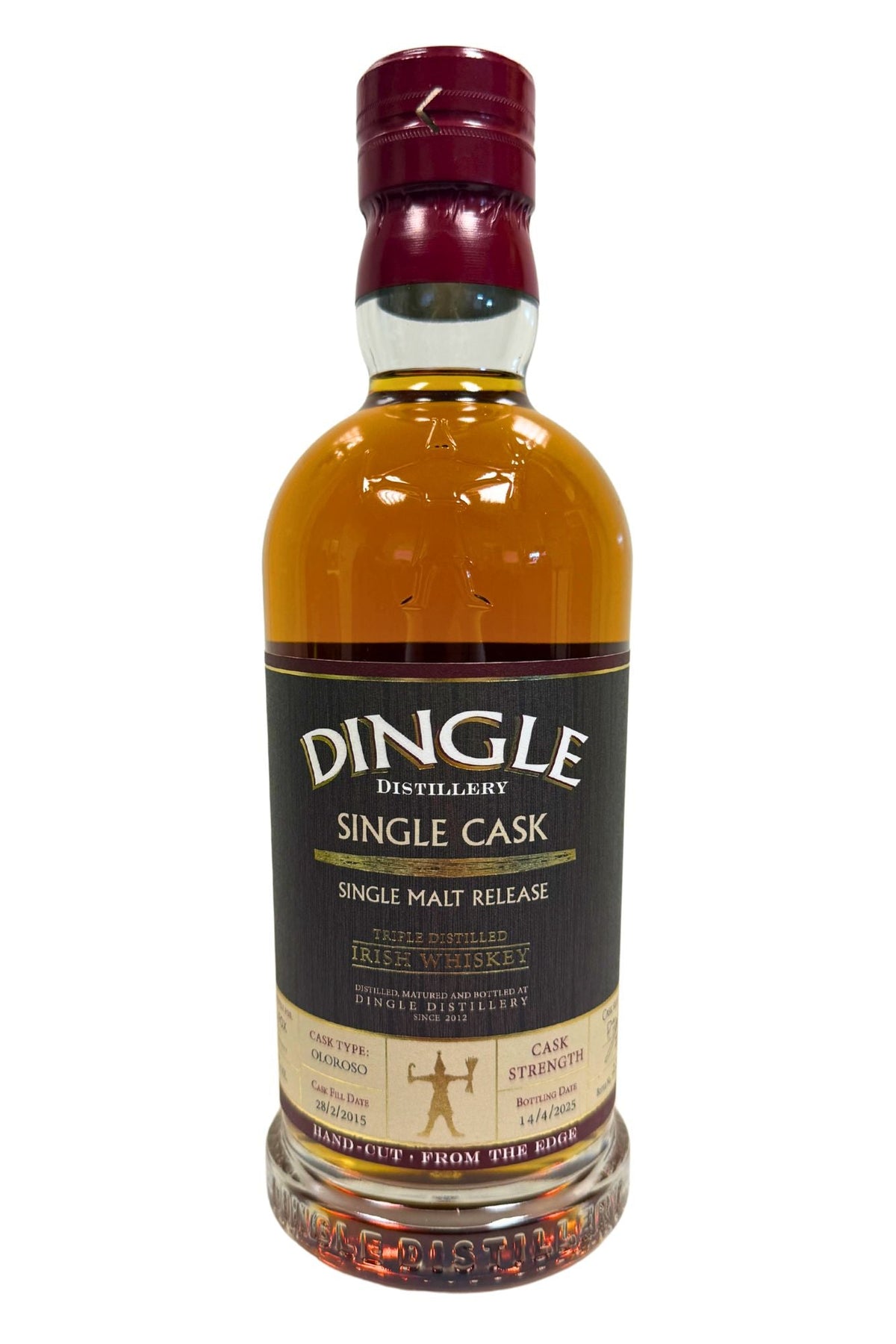
Single cask describes whiskey bottled from one cask. Cask strength describes whiskey bottled without adding water to reduce its alcohol strength after maturation. A whiskey can be one of these, both of these, or neither of these. Check the ABV on the individual bottle: cask strength is not a fixed percentage, and depends on the ABV of the spirit at the time of bottling.

What does "triple distilled" mean? Does it apply to all Irish whiskey?

“Triple distilled” means the spirit undergoes three stages of distillation before being matured in casks. The additional stage further concentrates the alcohol and refines the flavour profile, often producing a lighter style of spirit. It is a well-established tradition in Irish whiskey, although some Irish whiskeys are double distilled. The term describes the production method; the ingredients, stills and cask maturation also shape the whiskey’s final character.

Can Irish whiskey be smoky?

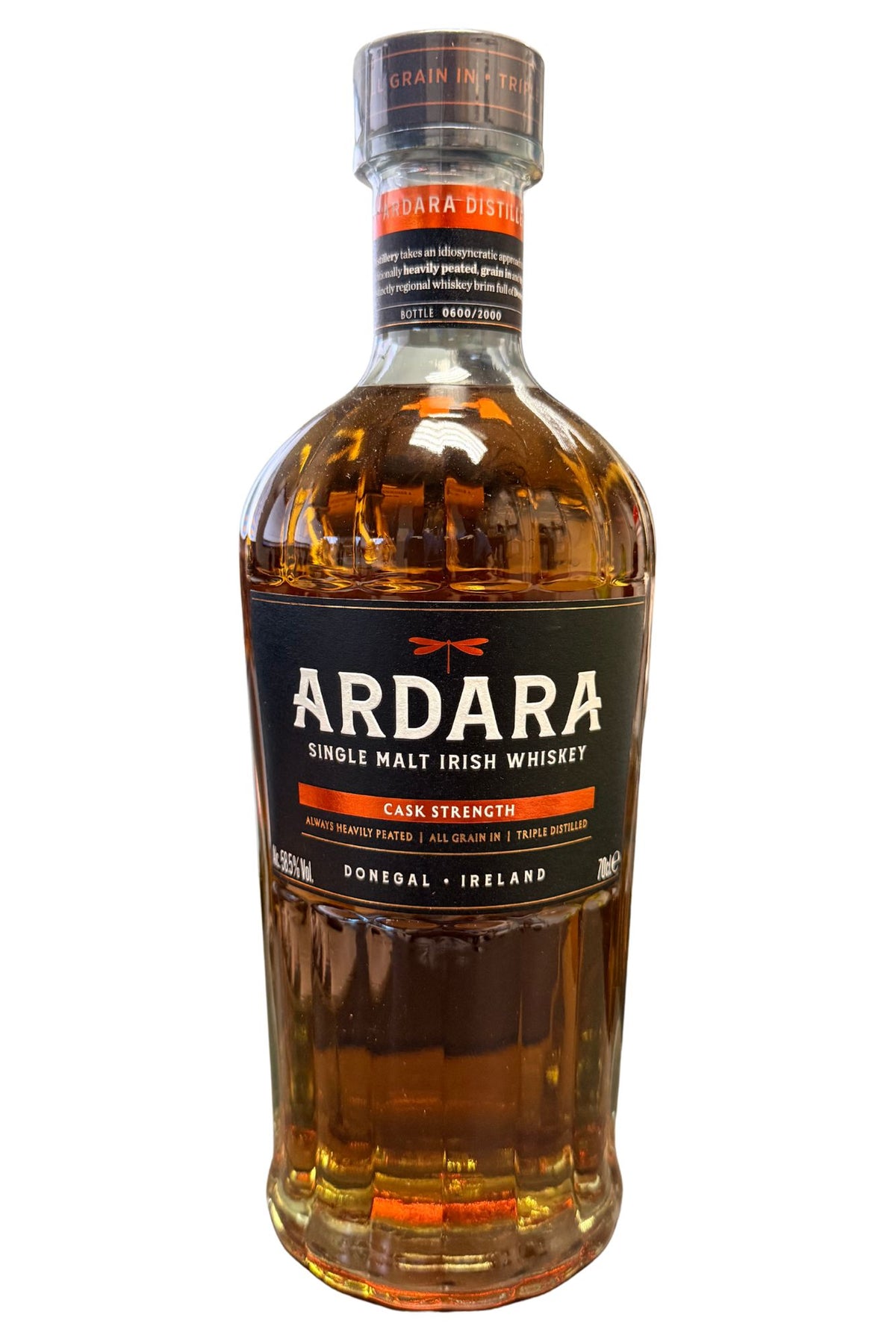
Yes, although it's not as common as in whisky made in Scotland, for example. Some Irish whiskeys use peated malt, where peat smoke is used during the drying of the malted barley. Look for “peated” in the description and check the tasting notes if you want a smoky whiskey, or would prefer to avoid that flavour. It tends to be one of those things that drinkers either love or prefer to avoid.

What does "X years old" mean? Is older Irish whiskey always better?

An age statement tells you the age of the youngest whiskey in the bottle. It may also contain older whiskey, but the stated age always reflects the youngest component.

Older whiskey isn’t always better. Longer maturation can bring complexity and greater oak influence, but the spirit, casks and balance of flavours matter too – as does your personal taste.

Whiskey also stops maturing once bottled, so keeping a 12-year-old bottle for another decade doesn’t make it a 22-year-old whiskey.

Which Irish whiskey should I try first?

There's no single right answer to this. For a sweeter starting point, you could consider a single grain. Our James J. Fox Single Grain offers some lovely crème brûlée and honeycomb notes, making it an approachable beginning of the whiskey journey. If you prefer more spice, our Single Pot Still brings nutmeg, plum pudding and candied peel. For richer dried-fruit and nutty flavours, The Quick Brown Fox, our single malt collaboration with JJ Corry, is another option we'd suggest to beginners.

Still finding your preferences? Consider starting with miniatures or a tasting set to discover what you enjoy. Our own Single Grain, Single Malt and Single Pot Still come in 100ml miniatures, so you can compare styles before choosing a full bottle. Browse our miniatures and tasting sets.

What is the difference between Irish whiskey and Scotch whisky?

Both are legally protected geographical names, with requirements covering where and how the spirit is made. The main rules are:

  • Irish whiskey: Mashed, fermented, distilled and matured on the island of Ireland, including Northern Ireland. The minimum maturation requirement is three years in wooden casks, commonly oak, holding no more than 700 litres.
  • Scotch whisky: Mashed, fermented, distilled and matured in Scotland. The minimum maturation requirement is three years in oak casks holding no more than 700 litres.

While the origin can be a hint on what to expect from the liquid itself, it's not necessarily its defining characteristic. We'd recommend looking at flavour profiles as a better way of discerning what bottles may or may not suit your taste.